Commercial Strip-Out and Refurbishment Waste Clearance - Office Clearance

Commercial Strip-Out and Refurbishment Waste Clearance

Preparing a commercial space for refurbishment or returning it to the owner at the end of a lease requires more than a standard clearance. Facilities managers and commercial property owners face strict deadlines, challenging dismantling works, and stringent health and safety regulations.

We provide professional office strip-out services designed specifically for operational clients managing relocations, renovations, or closures. Operating across London, we handle the full range of commercial interior dismantling and removal, from individual partition removal on a single floor to full strip-outs across multi-floor properties ahead of refurbishment or dilapidation handback.

If your office space needs a seamless strip-out before a refit, contact Office Clearance. We provide a methodical, compliant approach that mitigates risk, ensures site safety, and delivers a complete audit trail for all disposed materials.
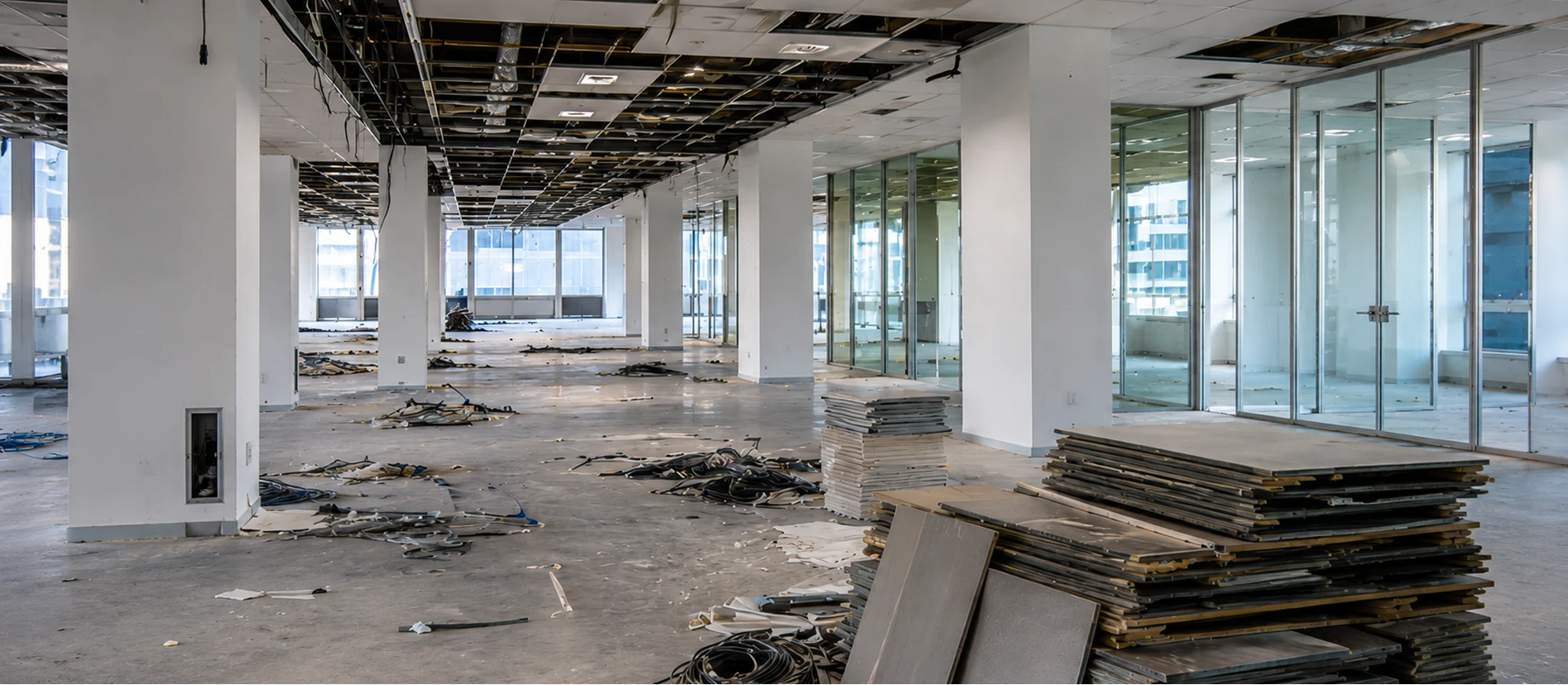
Commercial Strip-Out and Refurbishment Waste Clearance

Types of Waste We Handle

Strip-out and refurbishment projects generate waste across several distinct categories. Each type requires a different removal approach and, in some cases, a different disposal route.

When you seek our office strip-out services, here’s what we cover during the process.

Fixed Furniture Dismantling

Fixed Furniture Dismantling

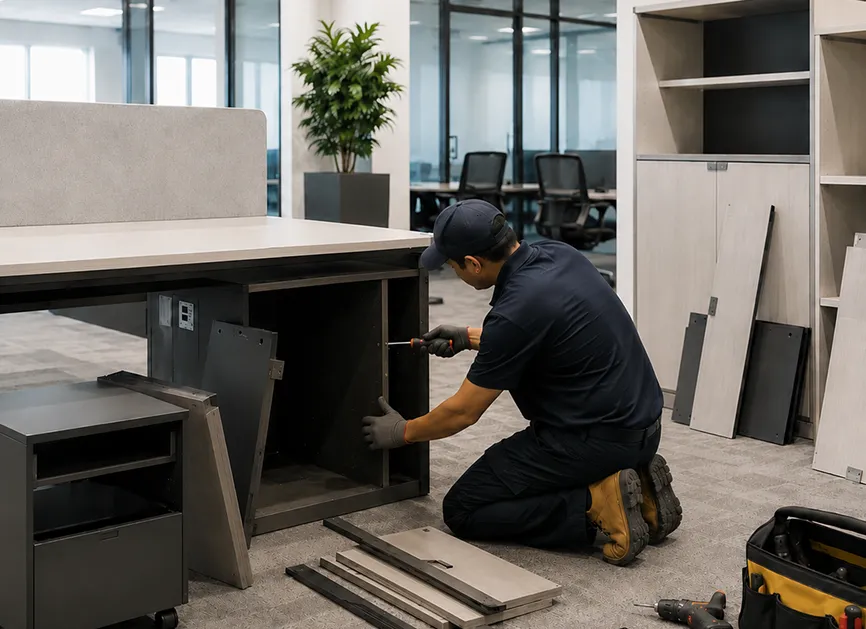
Fixed assets require careful dismantling to avoid damaging surrounding walls, flooring, and building fixtures during removal. During the strip-out process, we primarily use drills and hand tools to safely and efficiently dismantle built-in workstations, fitted shelving units, and fixed cabinetry while preserving materials wherever possible for reuse or recycling. We use crowbars and socket tools to loosen heavy fixings, detach anchored brackets, and separate structural joints where furniture has been secured directly into walls or floors.

Before any removal takes place, all electrical systems and powered equipment connected to furniture installations must be isolated and disconnected by the client or a qualified contractor. Once isolated, we carefully remove built-in cable trays and non-live cable management components using hand tools during the dismantling process.

For larger or heavier sections, we use lifting equipment and loading aids to move multiple components safely through corridors, lifts, and loading bays without damaging surrounding areas during the dismantling process.

Workspace, Divider & Partition Removal

Workspace, Divider & Partition Removal

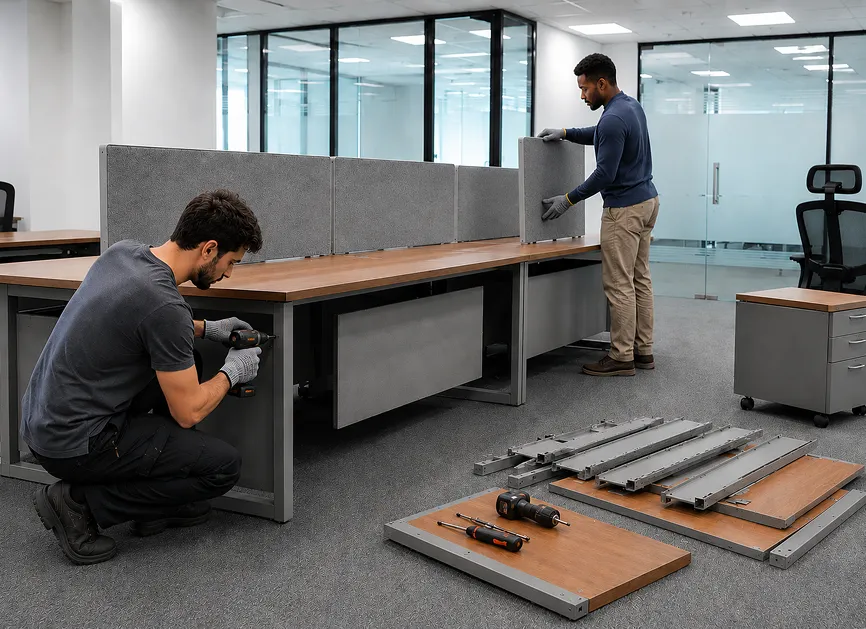
Office partitions and workspace dividers are commonly made from glass, aluminium framing, timber panels, plasterboard, laminate finishes, and integrated cable management systems. During the strip-out process, we work with drills, screwdrivers, spanners, and hand tools to disconnect partition fixings and remove demountable divider systems section by section.

For fixed partitions and framed structures, where there is no risk of damaging surrounding structures or materials requiring preservation, we may use reciprocating saws and grinders as a last resort to remove fixed brackets, support channels, or heavily secured sections safely.

Our team handles office divider removal and partition removal with precision, carefully extracting glass, wood, and metal components. We also execute rapid cubicle removal, clearing the floorplate entirely so your contractors can begin their next phase of work without delay.

Flooring, Laminate & Interior Uplift

Flooring, Laminate & Interior Uplift

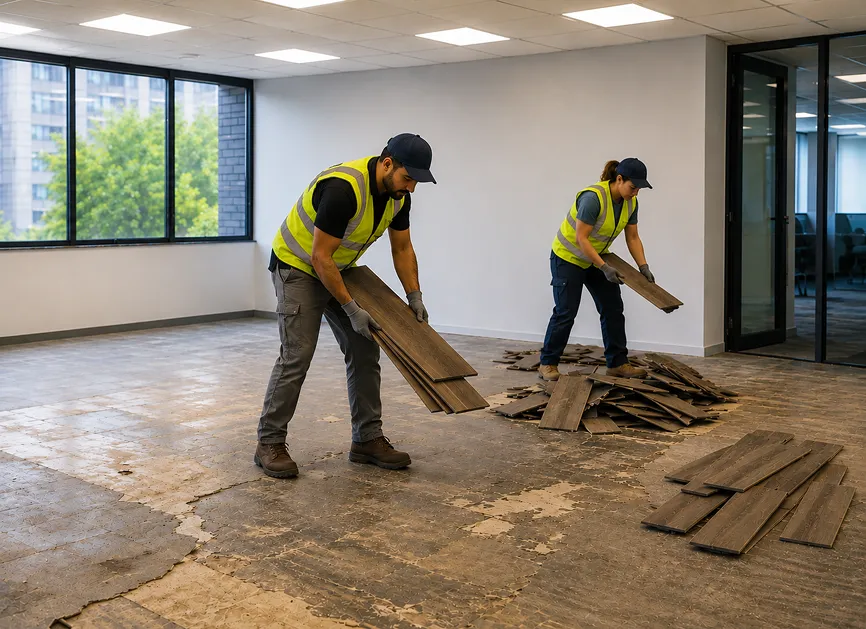
Commercial flooring systems are commonly made from laminate boards, vinyl sheets, carpet tiles, adhesive layers, and acoustic underlays. During the strip-out process, we use floor scrapers and lifting tools to remove flooring section by section without damaging the subfloor.

For heavily bonded materials, we use grinders and cutting tools to break through adhesive layers and safely detach fixed flooring.

We also remove underlay materials, edge trims, and transition strips while separating timber, vinyl, carpet, and metal components into the correct waste streams during uplift. By systematically removing flooring and controlling dust and loose debris throughout the process, we keep access routes safer for staff and others while reducing unnecessary damage to subfloors. Our team leaves the space clear for immediate contractor access and refurbishment work.

Refurbishment & Deconstruction Waste

Refurbishment & Deconstruction Waste

Refurbishment waste in office environments commonly includes plasterboard, timber offcuts, broken flooring, ceiling tiles, metal framing, packaging waste, cables, paint containers, and discarded fit-out materials. During the clearance process, we use drills and crowbars to dismantle fixtures and remove fixed materials safely from walls, floors, and work areas.

We also use cutting tools and reciprocating saws to break down oversized timber, plasterboard, and fitted materials into manageable sections for safe removal.

Loose debris and sharp offcuts are collected and separated into dedicated waste streams such as timber, metal, plasterboard, paint, and plastics during loading. We isolate and handle any leftover paint, partially filled containers, or solvent-based coatings separately to prevent leaks and contamination.

By progressively clearing waste throughout the refurbishment process, we reduce trip hazards, minimise dust build-up, and help maintain safer working conditions.

Kitchen, Washroom & Utility Fittings

Kitchen, Washroom & Utility Fittings

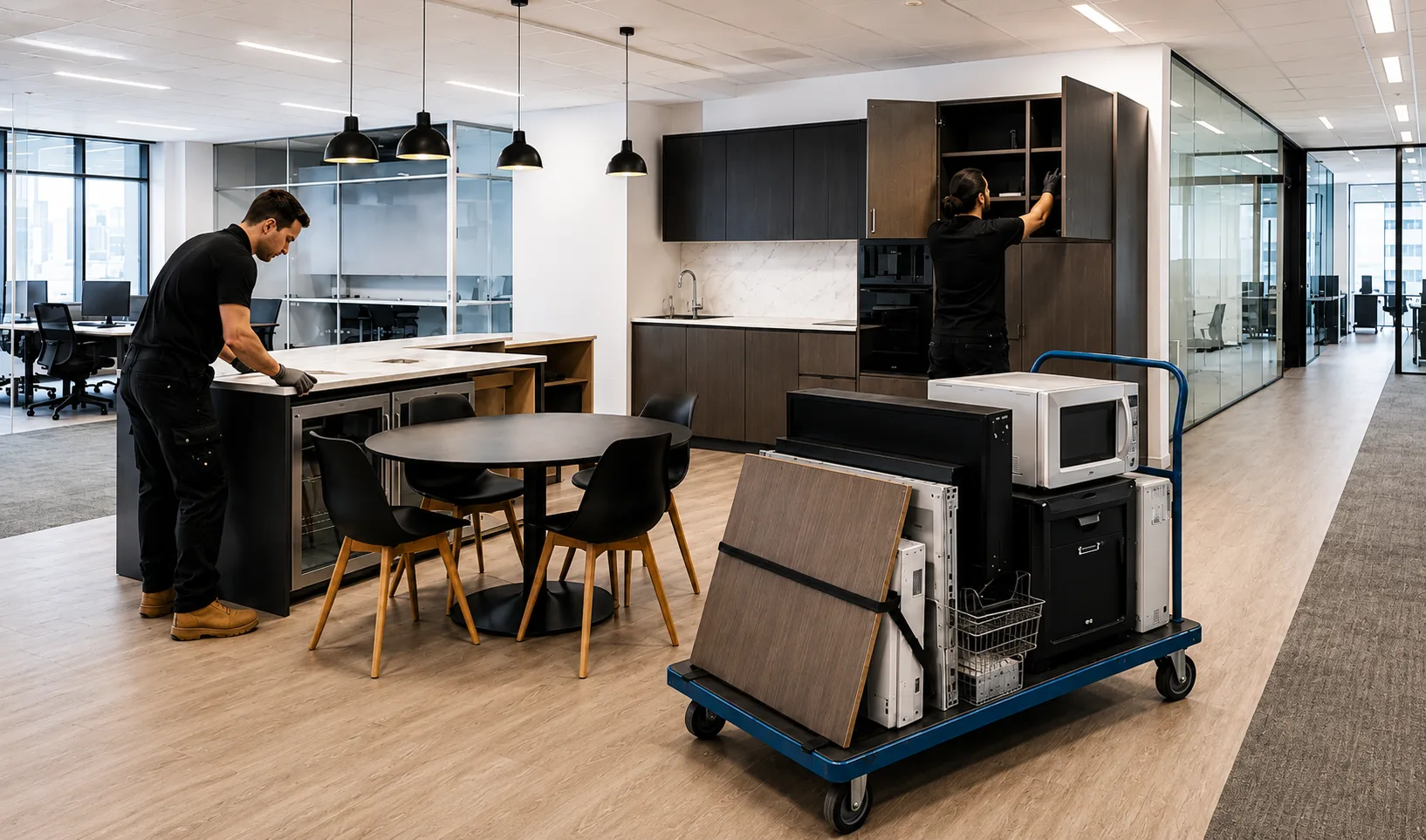
Refurbishment waste from office kitchens, staff areas, and washrooms commonly includes sinks, worktops, cupboards, sanitary ware, tiles, pipework, radiators, electric boilers, and small plumbing fixtures.

During removal, we use professional equipment, including drills, pipe cutters, crowbars, and hand tools, to disconnect fittings safely and detach fixed units from walls and flooring. Heavier items such as sanitary ware, radiators, and worktops are lifted and handled using specialist equipment to allow safe movement through removal routes and loading bays.

We separate materials, including ceramics, metals, plastics, timber, and mixed fittings, during loading to support appropriate recycling and disposal routes. By carefully removing these items, we avoid unnecessary damage to surrounding walls, flooring, and service areas during strip-out works.

Our Commercial Strip-Out Process

Executing seamless interior strip-out and refurbishment waste clearance services requires precise planning and resources. We do not rely on assumptions; we understand that every office strip-out requires a thorough dismantling assessment and access plan to ensure maximum efficiency throughout the project.

To manage these waste streams safely and efficiently, we follow a structured commercial strip-out and refurbishment waste clearance process designed specifically for active office environments.

Site Visit & Waste Assessment

Site Visit & Waste Assessment

dropdown arrow icon

We conduct an on-site assessment to identify the types of refurbishment waste generated, the volume of waste to remove, the loading arrangements, and any materials requiring specialist handling. During the inspection, we assess items such as flooring uplift waste, partition panels, fitted shelving, ceiling materials, paint containers, sanitary ware, and fixtures like electric boilers to determine the safest removal approach.

We also check for hazards linked to dust generation, sharp debris, loose materials, restricted access routes, or hazardous waste streams that may require controlled handling or specialist disposal routes.

Risk Assessment & Clearance Planning

Risk Assessment & Clearance Planning

dropdown arrow icon

Before clearance begins, we prepare a formal risk assessment and method statement covering manual handling, dust control, waste segregation, and safe movement of bulky or heavy materials throughout the building. Particular attention is given to active office environments, shared access routes, lifts, loading bays, and fire escape routes to minimise disruption during clearance works.

Where we find hazardous materials, such as paint, we isolate them to send to dedicated waste streams to prevent risks of contamination with general refurbishment waste.

Controlled Waste Removal

Controlled Waste Removal

dropdown arrow icon

During the clearance process, we use drills, crowbars, lifting aids, cutting equipment, and reciprocating saws to dismantle and remove refurbishment waste safely from office spaces. Oversized materials such as timber panels, flooring sections, shelving, worktops, and partition components are broken down into manageable sections for safe loading and transport.

Liquids, paint waste, and other materials with contamination risks are isolated separately on-site before removal. The remaining waste is transported and sorted afterwards into timber, plasterboard, metal, flooring materials, cabling, and mixed construction waste streams at the appropriate processing facility. This helps reduce trip hazards, control dust build-up, and maintain safer working conditions during ongoing refurbishment works.

Compliance Documentation & Waste Disposal

Compliance Documentation & Waste Disposal

dropdown arrow icon

Following the collection, we provide the appropriate compliance documentation for the waste removed. Depending on the waste streams involved, this may include Hazardous Waste Consignment Notes for waste such as paint, or WEEE documentation for electrical fittings, such as parts of a central heating system.

All refurbishment waste collected during the project is transferred through authorised recycling and disposal routes in line with Duty of Care requirements under the Environmental Protection Act 1990.

Site Visit & Waste Assessment Risk Assessment & Clearance Planning Controlled Waste Removal Compliance Documentation & Waste Disposal

Why Choose Office Clearance for Commercial Strip-Out?

There are specific reasons why office strip-out services require a professional clearance team with both operational and compliance experience.

As an experienced soft strip-out service provider, we streamline your process, making it smoother, hassle-free, and time-efficient while maintaining complete compliance.

Why Choose Office Clearance for Commercial Strip-Out?

Here’s why you should consider hiring Office Clearance if you’re looking for a commercial strip-out contractor.

All items we collect as strip-out waste are sorted in our yard by material stream: timber, metal, plasterboard, vinyl, laminate, and glass. We send each stream to the appropriate authorised recycling facility, ensuring nothing is sent as mixed waste to a general tip.

Our team arrives with the correct tools for every task identified during the site visit. Drills, grinders, reciprocating saws, and mechanical lifting aids are standard for strip-out projects. The Scope of Work prepared before collection day reflects exactly what tools are needed and how each fixed item will be removed.

We offset 100% of the carbon emissions generated during every collection through our Ecologi partnership. This applies to our strip-out collections as well as standard clearances. Through this partnership, we offset every tonne of carbon emissions generated by your site strip-out collection through initiatives such as reforestation and renewable energy production.

We operate across Greater London and handle commercial strip-out works in locations such as Paddington and King’s Cross. We also support larger strip-out and clearance projects outside London where substantial volumes of waste or refurbishment materials are involved.

Our team is familiar with the access and parking logistics specific to commercial buildings, including loading bay restrictions, timed vehicle access, and after-hours collection requirements.

Planning an office strip-out or refurbishment waste clearance in London?

At Office Clearance, we provide professional office strip-out services designed specifically for operational clients managing relocations, renovations, or closures. Rather than simply moving loose furniture, our trained teams manage the complex, heavy-duty removal of built-in assets, internal structures, and refurbishment waste.

Contact us today to discuss your project scope, timeline, and site access requirements for a commercial strip-out and refurbishment waste clearance.

Frequently Asked Questions

What is the difference between office clearance and commercial strip-out services?

dropdown arrow icon

Office clearance typically refers to the removal of loose, non-fixed items such as freestanding desks, chairs, and IT equipment. Office strip-out services involve the heavy-duty deconstruction and removal of fixed assets, internal structures, partitions, flooring, and built-in furniture to return a commercial space to its original, bare state.

Can strip-out materials be sorted for reuse and recycling?

dropdown arrow icon

Yes, all strip-out materials will be sorted for reuse and recycling. We operate a strict environmental policy and prioritise reuse and recycling in our every service. During dismantling, we carefully separate materials such as metal, wood, and plastics.

You will receive a compliance report, including Waste Transfer Notes (WTN) outlining the legal transfer of waste between parties, i.e., who the waste is being transferred to and by whom.

What is a soft strip-out in a commercial property?

dropdown arrow icon

A soft strip-out involves removing all non-structural elements inside a building before a major refurbishment or demolition. This includes removing suspended ceilings, partition walls, and flooring, and dismantling fitted units, leaving only the property’s structural framework intact.

Do strip-out projects require Waste Transfer Notes or disposal documentation?

dropdown arrow icon

Absolutely. Compliance documentation is a legal requirement for commercial waste removal and disposal. Upon completion of the project, we provide a full, legally compliant audit trail. This includes Waste Transfer Notes (WTN), Hazardous Waste Consignment Notes where applicable, and WEEE Certificates for any integrated electrical equipment removed.

Are your strip-out services suitable for end-of-lease and dilapidation projects?

dropdown arrow icon

Yes. Our services are heavily utilised by facilities managers and tenants who need to meet strict dilapidation clauses at the end of their commercial lease. We efficiently clear and strip out the space so you can hand the property back to the owner on time and avoid costly penalty fees.

phone-icon